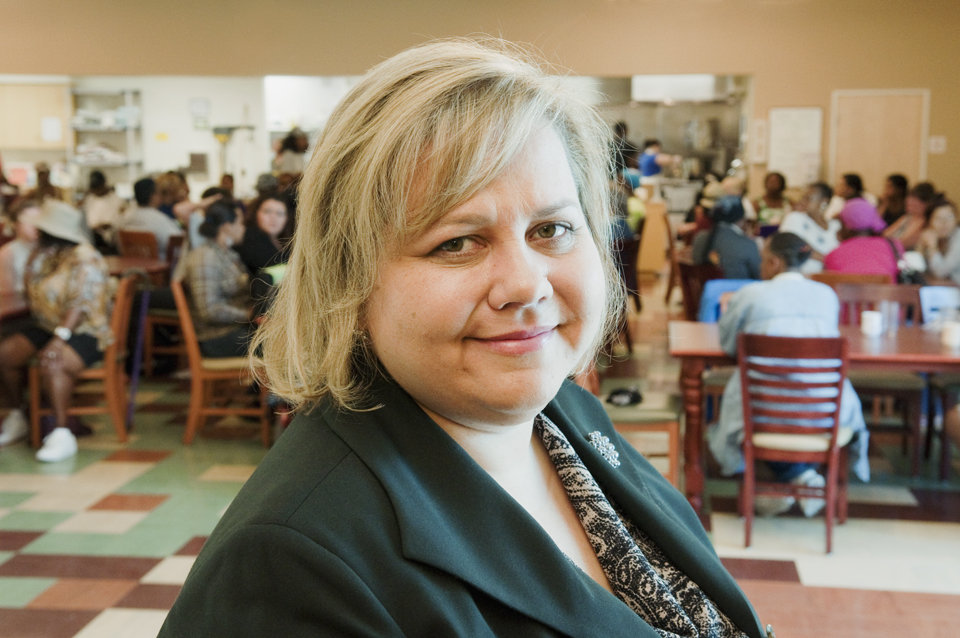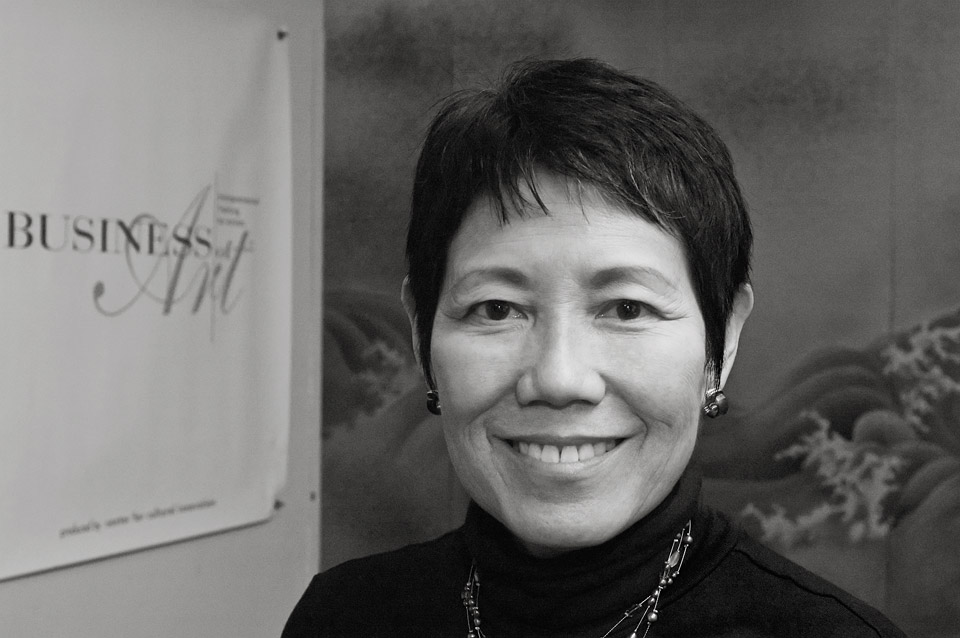
Cora Mirikitani is the former President and CEO of the Center for Cultural Innovation, a training and financial services incubator serving individual artists. For her project, she investigated new donor development streams that can better support the work of, and increase available resources to, individual artists in Los Angeles.
* Cora transitioned out of her role at the Center for Cultural Innovation in 2014.
Fellowship Summary
The Problem
My Stanton Fellowship provided an opportunity to explore the possibility of developing an online fundraising tool for individual artists. This idea would bring together my past experience as a foundation grantmaker in the arts with my current work as the leader of a nonprofit organization dedicated to strengthening the support system for working artists in California. Benchmark research on the needs of individual artists in the United States has shown that artists in this country are severely undercapitalized, both in their ability to sustain their livelihoods as working artists and to support the actual costs of making artistic work. Traditional philanthropy had created a system of donor patronage to artists that rewards a select few. Could the power of the Internet to organize and aggregate smaller virtual communities lend itself to the creation of a website—a “virtual foundation”—that could connect artists and their work to grassroots donor circles?
My Process of Discovery
I began my investigation by researching key individuals and companies who were creating innovative donor websites, as well as thought leaders from the arts, philanthropy, and the commercial sector who were exploring new individual donor strategies. This led to a series of in-person meetings and interviews that provided critical information and feedback, ultimately shifting my original idea.
What started as “online fundraising for artists” eventually grew to become an even more exciting and robust concept: the creation of a “citizen philanthropy” portal designed to link individual donors to a wide range of community innovators working in health care, education, social justice, the environment, and the arts. The evolution from a narrow, artist-focused concept to a multi-channel concept that could link many small donors to networks of innovators in their communities was a giant leap. In practical terms, it resulted in mid-course changes in my Fellowship work plan which. The plan originally called for the creation of and focus group testing for a functional light prototype. Now, I shifted to instead creating a “storyboard” prototype that sketched out the newly-imagined website. This most recent version of the online giving concept has been vetted by an experienced group of advisors with diverse expertise in technology, legal issues, internet startups, venture philanthropy, and the arts. Their positive feedback has affirmed that this could be a powerful new idea at just the right moment.
What Comes Next
By the end of my Fellowship, I felt ready to test the waters for additional funding support to take the idea forward into its next phase of development. I presented my concept to a national funder, who has since provided me with a planning grant allowing me to develop a formal business plan for the Citizen Philanthropy website. Passion for the cause of artists and a curiosity about a potential solution for their funding needs was what motivated me to pursue my Stanton Fellowship. In hindsight, though, perhaps the greatest benefit of my Fellowship was that it allowed me to do the most basic and beneficial things: have the time to read, think expansively, engage in inspiring conversations with experts outside of my own domains of expertise, and imagine the structure and design of an exciting and promising new idea. I hope to look back on my Fellowship as the reason it happened.