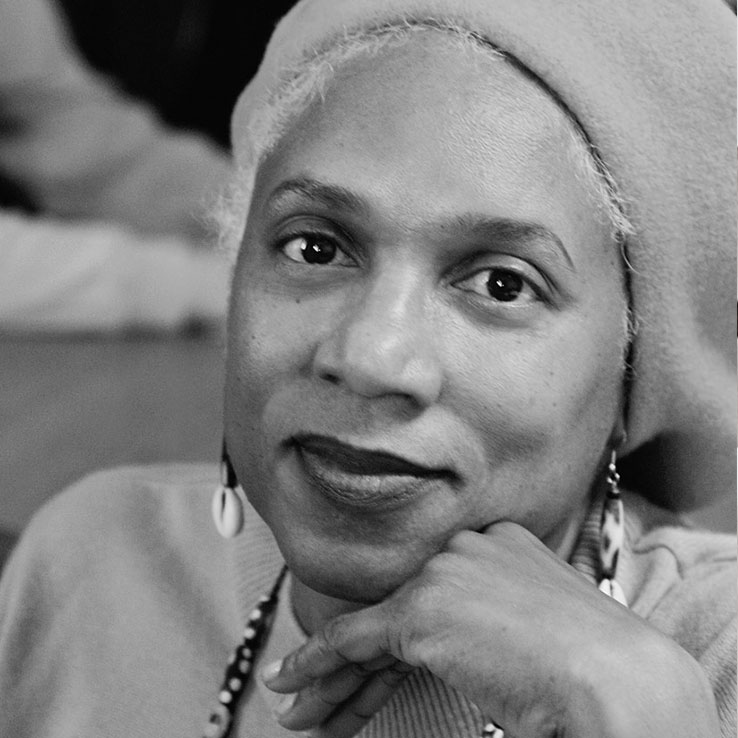
Eve Hill is the former Executive Director of the Disability Rights Legal Center, which provides information, education, mediation, and legal representation for people with all types of disabilities. For her inquiry, she consulted with national media and communications experts about how to change the public perception of disability rights, and created a plan for doing so with a disability rights coalition.
Eve explains, “The law is not enough to change society’s attitudes toward people with disabilities. We need to work on framing the discussion and influencing public opinion of the disability rights movement. We must identify the public values and beliefs that our issues resonate with, and we must fashion our messages to be based on those values.”
* Eve transitioned out of her role at the Disability Rights Legal Center in 2007.
Fellowship Summary
The Issue
The Americans with Disabilities Act (ADA) has had mixed effectiveness in its 17 years of existence. People with disabilities are more active in their communities. However, some studies have indicated that employment of people with disabilities has remained flat, or has even declined, since the ADA was written into law. It is clear from media presentations of the issues that public opinion has not shifted its frame of reference on disability issues.
The frame of the public’s perception of disability has traditionally focused on charity/pity and medical cures without recognition that the people who live with disabilities are capable and that the barriers to their participation are largely externally imposed. This recognition—on which the ADA is based—is known as the civil rights model. It recognizes that discrimination on the basis of disability is unnecessary and inherently unjust.
The traditional charity/medical frame of disability has proved remarkably difficult to change. Successful people with disabilities are seen as exceptions or as having overcome their disabilities. We continue to believe that people with disabilities should be pitied, helped through charity, and not expected to be active. Disability rights are still associated with government benefits. People who demand fair treatment are seen as asking for special favors and are often written off as undeserving. People who need accommodations are seen as reinforcing the belief that people with disabilities simply can’t make it in the real world.
The traditional charity/medical frame of disability has proved remarkably difficult to change. Successful people with disabilities are seen as exceptions or as having overcome their disabilities. We continue to believe that people with disabilities should be pitied, helped through charity, and not expected to be active. Disability rights are still associated with government benefits. People who demand fair treatment are seen as asking for special favors and are written off as undeserving. People who need accommodations are seen as reinforcing the belief that people with disabilities simply can’t make it in the real world.
A backlash is growing against disability rights. The news media, policy makers, and courts are creating a framework in which civil rights are seen as a gift for only a few needy or exceptional people with disabilities. Chambers of commerce offer media blitzes that portray people with disabilities who seek access to businesses as greedy gold diggers who just want to line their pockets while living on charity. Media is portraying disability rights as a threat to small business without showing the positive effects of access on the ability of people with disabilities to work, pay taxes, and reduce government benefits expenses. But the media, policy makers, chambers of commerce, and businesses are not making these things up—they are responding to unchallenged beliefs and values of the public, and they are playing on those beliefs.
Clearly, the law is not enough to change society’s assumptions. We need to work on framing the discussion and influencing public opinion of the disability rights movement. We must identify the public values and beliefs that our issues resonate with, and we must fashion our messages to be based on those values. A great deal has been written recently about the need for values-based messaging in various contexts, including progressive politics and affirmative action. These concepts include identifying core values, being explicit about how your goals serve those values, framing messages to resonate with those values, and framing public discussion to explore those values and messages. I believe these concepts can work for the disability movement.
Two years ago, I began a study of how the disability rights movement could better frame and communicate its messages to get the media and the public to understand disability rights issues. The questions I sought to answer were:
- How does values-based messaging work, and how can the disability rights movement incorporate it?How can the disability movement use or expand upon the civil rights and values-based messages to reframe the public debate on disability issues?
- I conducted a great deal of research into values-based messaging, met with experts in the field, and conducted interviews of advocates regarding the frames being used in the debate over physician-assisted suicide, one of the most debated issues in the field.
Conclusions
- Reasons for Disability Rights Movement’s Limited Effect on Transformation of Public Perception of Disability
- The Disability Rights Movement Focused on Policy Makers Rather than the General Public
- Lack of Broad Participation in the Movement by People with Disabilities
- Lack of Affirmative Action or Tracking of Employment of People with Disabilities
- Lack of a Unified Message or a Shared Leader in the Community
- Lack of Shared Culture or Experience Among People with Disabilities
- Lack of Focus on—and Consistent Approach to—the Media
- Lack of Perception of the Disability Community as a Market
- Reduced Emotional Resonance of Civil Rights Messages
- Influence of Charity and Pity, Rather than Hatred
- Deep Fear of Disability
Solutions
More work is needed to assess how the disability rights movement is seen by the public. My preliminary research suggests that fear is the major concept the general public applies to disability issues. The disability rights movement needs to frame its messages using powerful values that respond to that fear.
The disability rights movement has been utilizing messages based on “second-tier” values, such as civil rights. We need to frame our messages more in terms of first-tier values, such as justice, fairness, work, and responsibility.
The disability rights movement needs a comprehensive communications campaign. Umbrella messages should be focused on:
- Independence/self-reliance
- Opportunity
- Responsibility
- Fairness