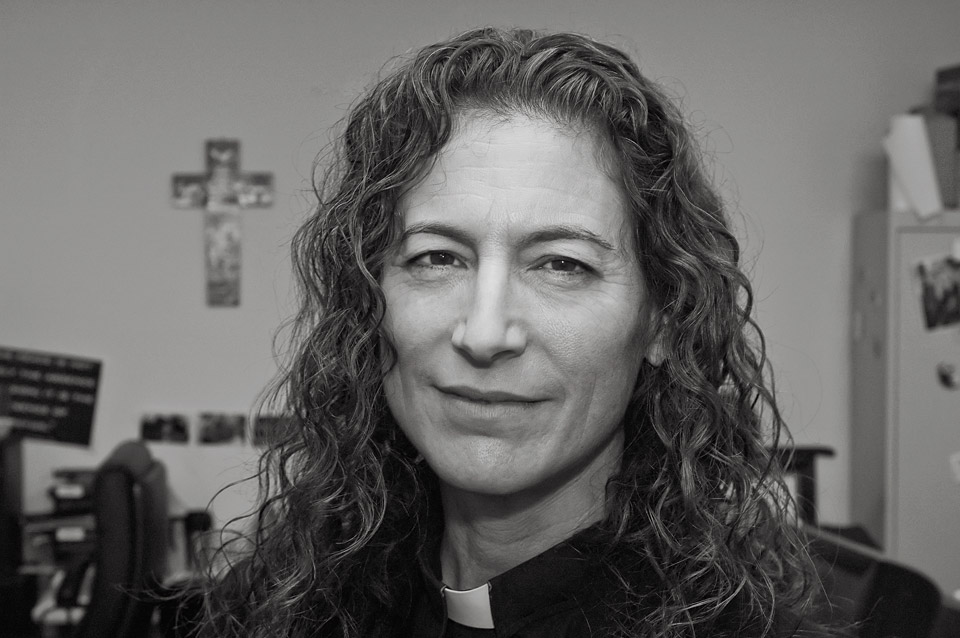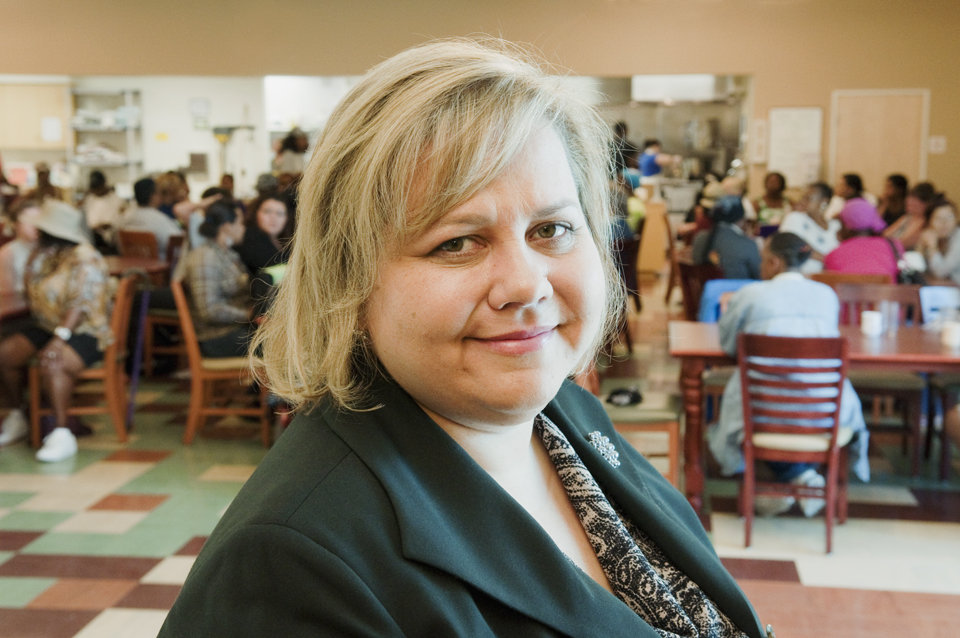
Lisa Watson is the former Executive Director of the Downtown Women’s Center (DWC), which provides permanent supportive housing and other services for women who would otherwise be homeless. The Center’s mission is to end homelessness for women and gender diverse individuals by providing safe housing and supportive services centered on wellness, employment, and advocacy. Her project explored the best options for using co-located commercial space as a funding source for nonprofit supportive housing organizations.
* Lisa is now the Principal Consultant with Watson Consulting Group, and she does consulting work for The Durfee Foundation.
Fellowship Summary
The Problem
Having served ten years as Executive Director of the Downtown Women’s Center (DWC), it is emphatically clear that the problem of homelessness will not be resolved without increased availability of housing stock to meet our community’s needs. As for women who suffer from chronic homelessness, this need is best met through housing units that include supportive services facilitating improved mental health and self-sufficiency. Given the pricey real estate market of urban Los Angeles, and in particular the gentrification of the central city, developing a sustainable means of providing appropriate units is essential.
The Proposal
My proposal for the Stanton Fellowship addressed the potential of a social enterprise endeavor to provide a “double bottom line” for meeting housing needs among homeless women. By the close of 2010, the DWC will have completed its capital project, opening 72 new units for homeless women along with an on-site Day Center and community clinic. The new site will contain ground-floor space suited to commercial use. My goal was to determine a suitable project to operate out of that space, offering both a revenue stream for sustaining programs and an employment development program offering opportunities for homeless women to cultivate job skills lending to improved self-sufficiency.
My Stanton Journey
My journey involved three distinct yet overlapping efforts that served to elevate my understanding of the social enterprise model as a vehicle for empowering a response to the problem of homelessness, and to apply this knowledge to my leadership in guiding DWC toward a powerful new future. These efforts included:
- Examination of successful projects in the US and abroad
- Cultivation of support for a DWC social enterprise via conducting “wisdom holder” events with stakeholders, developing feasibility studies, and establishing a DWC social enterprise committee
- Defining specifics through development of a business plan
While studying the successes and challenges of existing enterprises revealed a wealth of information, key findings that fueled the vision for DWC included the recognition that skills training opportunities must match the profile and needs of the actual women for whom the benefits are intended. Flexibility and community-building are key. Drawing on these findings, I recruited more than 50 individuals for participation in a series of wisdom holder meetings, conducted in order to define the type of business that would find support in the local community, the job training that would most benefit participants, and the potential for continued growth. This effort resulted in the formation of a committee with a shared vision for our project’s potential in the Skid Row community, as well as a commitment to community involvement in leveraging talent and other resources essential to our success.
Our Project took shape as a retail endeavor focused on the sale of updated, repurposed goods, as well as product lines created largely from recycled and recyclable materials, fabricated by program participants. The enterprise capitalizes on the interest of local urban dwellers in supporting a less wasteful society and makes use of the many donations DWC regularly receives. Community involvement is our basic building block. Importantly, our enterprise must give equal weight to the need for impactful job training and the need to operate a successful, income-generating storefront. The plan to develop product lines produced by homeless women and sold in our retail store will require the involvement of talent on many levels, ranging from product design to best practices in skills training to branding and marketing. This need necessitates tapping individuals from a variety of professions. As partners emerge, we find that they, like we, are energized by the exciting possibilities of our double bottom line. Our partners and allies are united by an interest in both a more environmentally-conscious world and a brighter future for homeless women.
The business plan that arose from the process is innovative in its strategies for matching skills training with actual needs and is fueled by its ability to tap the creative forces of individuals from many sectors of the local community. A market analysis, operations plan, sales strategy, financials, and implementation plan make the plan business-savvy. Community-building gives the plan legs.
My Stanton Fellowship has brought a wealth of learning that has shaped my leadership and may well shape new outcomes for homeless women in Skid Row. My most valued finding is perhaps the discovery that when one is able to think creatively in addressing even what appears an intractable problem, that problem can serve as inspiration for exciting community action for change. As my Fellowship drew to a close December 2009, the Project entered a new beginning. A roadmap had been documented and key persons positioned to carry its vision to the next step. The passions, creativity, and shared vision among many will fuel our success.